Last updated
Photographer SEO guideLocal SEO for Photography Studios, Rank in Every City You Serve
Photography clients search by session type, city, and venue. “Wedding photographer Austin” is a different search from “photographer at [venue name]” and both represent $2,000–$8,000+ bookings. If you’re running ads at $5–$20 per click, you’re paying for traffic that dedicated pages capture for free. If you’re not running ads, every engaged couple, expecting parent, and corporate client in your market is finding the photographer who built pages for their specific search.
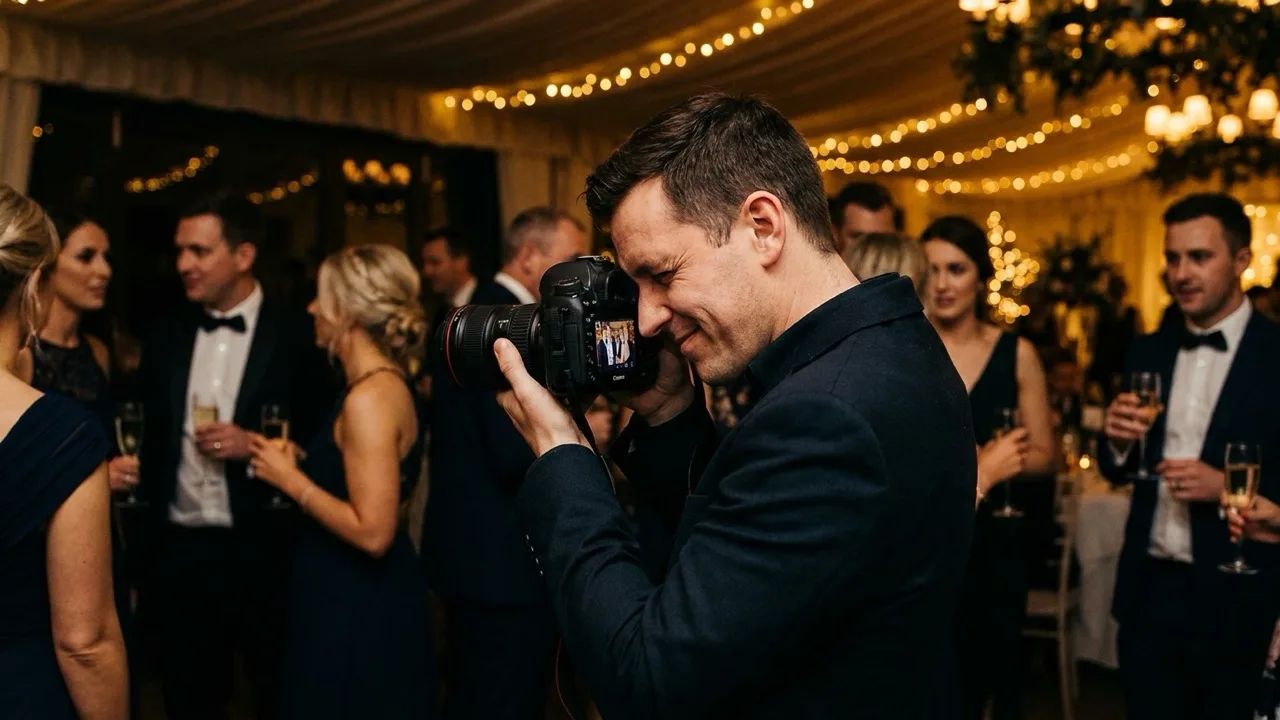
Photography Clients Search by Session Type, City, and Venue, You Need Pages for All Three
Photography search behavior is uniquely multi-dimensional. A bride searches “wedding photographer [city]” then “photographer at [venue name].” A new mom searches “newborn photographer near me.” A CEO searches “professional headshots [city].” Each is a distinct search with a distinct booking value, and each requires its own page to rank.
If you have one “Services” page and a homepage, you’re competing for exactly one of these searches. The photographer with 50–100 pages, session types, city pages, and venue-specific content, captures all of them. At $2,000–$8,000 per wedding booking and $300–$1,500 per portrait session, each ranking page is a direct revenue asset.
A single “wedding photographer [city]” page that books one wedding per month represents $24,000–$96,000 in annual revenue, from one page.
CPC data from Google Keyword Planner. According to BrightLocal research, 98% of consumers search online for local businesses. Clemson University research confirms structured SEO is the primary driver of sustained organic traffic.
Same traffic. One costs money every month. The other compounds.
The Keyword Types That Drive Photographer Revenue
- Wedding$10–$20
- Portrait$5–$12
- Headshot$8–$18
- Venue-specific$5–$15
A page that ranks for the same searches has no per-click fee.
Each bar is the average cost of one paid click for that keyword type, from the table below. Every one of these searches is a click you pay for in ads, and a page that ranks for it earns the same visit with no per-click fee.
| Keyword Type | Example Query | Avg CPC | Intent |
|---|---|---|---|
| Wedding | wedding photographer [city] | $10–$20 | High, booking with deposit |
| Portrait | family photographer near me | $5–$12 | High, session-ready |
| Headshot | professional headshots [city] | $8–$18 | High, corporate budget |
| Venue-specific | photographer at [venue name] | $5–$15 | Very high, venue chosen |
The Photographer Page Architecture That Covers Your Full Territory
- 1City pages anchor your geographic presence
- 2Session-type pages capture specific buyer intent
- 3Venue pages capture the highest-converting search in photography
City pages anchor your geographic presence
One dedicated page per city and suburb in your service area. Photographers travel, but Google doesn’t know that unless you have pages proving it. A wedding photographer based in Austin who shoots in San Antonio, Dripping Springs, and Fredericksburg needs dedicated pages in each location or they’re invisible to clients searching there.
Session-type pages capture specific buyer intent
Wedding, engagement, family, senior portrait, newborn, maternity, headshot, commercial, each session type is a distinct buyer with a distinct budget and timeline. A bride searching “wedding photographer” and a startup founder searching “corporate headshots” both need to land on a page that speaks directly to their need.
Venue pages capture the highest-converting search in photography
“Photographer at [venue name]” is the most conversion-ready search in the photography vertical. The client has already booked the venue, they’re looking for a photographer who has shot there before. A dedicated venue page with gallery images from that location converts at 3–5x the rate of a generic portfolio page.
What visitors see.
What Google reads.
<script type="application/ld+json">
{
  "@type": "ProfessionalService",        // ← what you are
  "name": "Your Business",
  "telephone": "+1-555-0100",
  "address": { "@type":"PostalAddress", "addressLocality":"Your City", "addressRegion":"ST" },
  "areaServed": ["Your City", … every city],   // ← each "near me" search
  "openingHoursSpecification": "Mo-Sa 08:00-18:00",
  "priceRange": "$$"
}
</script>

<script type="application/ld+json">{ "@type":"Service" … }</script>   // ← ranks every service
<script type="application/ld+json">{ "@type":"FAQPage" … }</script>   // ← "People Also Ask"
<script type="application/ld+json">{ "@type":"BreadcrumbList" … }</script>   // ← sitelinks in results
<script type="application/ld+json">{ "@type":"Organization", "sameAs": […] }</script>   // ← brand entity

<title>Wedding Photography in Your City | Your Business</title>
<link rel="canonical" href="/wedding-photography/your-city/">Drag to compare, the design visitors see sits on top of the code machines read
Above the blue links sits the Map Pack, a different race, run on your Google profile
The pack sits above the ten blue links
When someone searches "photographer near me," Google does not lead with the ten blue links. It leads with the Map Pack: three local businesses, with ratings, hours and a call button, sitting above everything else. Most of the taps go there, and on a phone it can fill the screen before a single organic result appears.
What Google ranks the pack on
The Map Pack runs on a different engine to your website: your Google Business Profile. Google picks those three pins on proximity to the searcher, how complete and accurate the profile is, category match, and review signal. That is why plenty of photography studios rank well organically and are still missing from the pack, and why the two need working on together.
Reviews are the tie-breaker, in the pack and in the sale
Why reviews decide the click
Picture two photography studios in the same Map Pack for the same search. One shows 4.9 stars across 180 reviews; the other 4.4 across 30. The person deciding is not reading either profile closely, they are pattern-matching in about two seconds, and the stronger row gets the call. The gap is rarely about the quality of the work; it is about which business made reviewing easy.
Getting more reviews without chasing them
Left alone, review counts stall. Busy weeks mean nobody remembers to ask, and one unhappy review sits unanswered at the top. A review request that fires automatically after every completed job, plus a fast reply to each new review, moves both the rating and the count without anyone having to remember.
Citations and links: the trust signals behind every ranking
Consistent citations tell Google you are the real thing
Every place your name, address and phone number appears online, directories, Yelp, the BBB, industry listings, is a citation. When they all match, Google trusts that the business is legitimate and located where it says, and is more willing to rank it in the Map Pack. When they conflict, an old address here, a wrong number there, that trust erodes and rankings slip.
Links are how Google measures authority
The reason a national brand outranks the local shop is usually not better content, it is more sites linking to it. For a local business the useful links are the reachable ones: suppliers, trade associations, the local chamber, sponsorships, and the press that covers the cities you serve. A handful of genuine local links moves more than a hundred bought ones.
Three layers at the root, one landing per city
Every page sits one hop from the home page. Services carry the authority, offerings close the sale, occasions catch people at the moment they start looking, and each city you serve gets a single landing page. Nothing is nested underneath a city, because a nested page splits the strength of the two pages above it.
yoursite.com/home/wedding-photography/layer 1 · service ranks “wedding photography”/portrait-sessions/layer 1 · service/financing/layer 2 · offering · closes the sale/emergency-service/layer 3 · occasion catches them at the moment/your-city/one landing per market/next-city/add a city, add a nodeWhy not the matrix: a page for every service in every city multiplies fast, and those per-city copies split each city’s authority across every service, and each service’s authority across every city. Thin pages lose to strong ones. The multiplier is the links between them, not the page count.
● home
├─ root page, one hop from home
└─ one landing per market
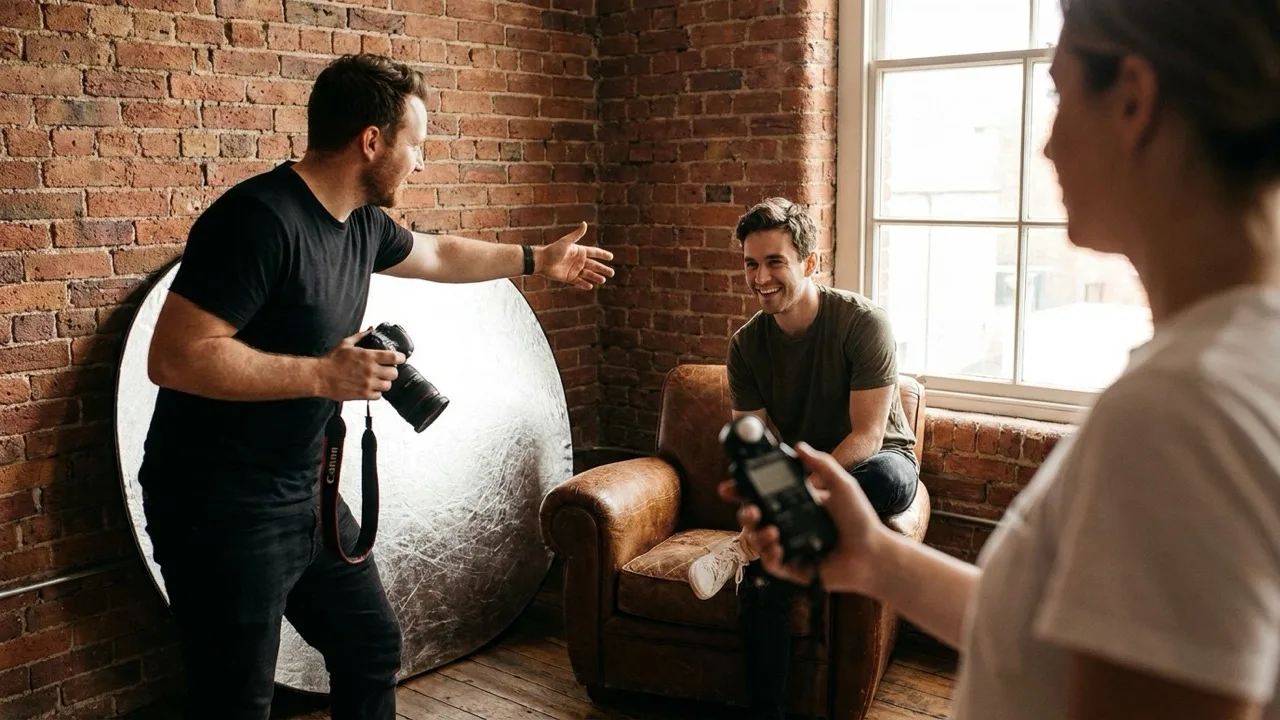
Venue Pages Capture Clients Who Have Already Decided to Hire, They Just Need to Choose Who
Event photographers have a page opportunity that almost no other vertical has: venue-specific pages. When a bride searches “photographer at Barr Mansion Austin,” she’s already booked the venue, set the date, and allocated the budget. She’s not browsing, she’s hiring. The photographer with a dedicated page for that venue, showing real gallery images from real weddings shot there, wins the booking.
Most photographers have zero venue pages. They rely on their portfolio page to do everything. A portfolio page with 200 mixed images can’t compete with a dedicated page titled “Wedding Photography at [Venue Name]” with curated images from that specific location. Venue pages are the highest-converting content asset in photography SEO, and your competitors almost certainly haven’t built them.
Is Your Photographer Website Set Up to Rank?
- ✓Dedicated city page for every metro and suburb you serve (example: in place)
- ✓Separate pages for wedding, portrait, headshot, newborn, commercial (example: in place)
- ✓Venue-specific pages with real gallery images from each location (example: in place)
- !Session-city market landing pages for long-tail coverage (example: gap)
- !LocalBusiness schema with service area and session types (example: gap)
- ✓AggregateRating schema for trust in high-investment decisions (example: in place)
- !Gallery / portfolio integration on every page (example: gap)
- ✓Booking or inquiry form prominent above fold on every page (example: in place)
Missing more than 2? You’re leaving the majority of your organic traffic on the table, either paying for it in ads or losing it to competitors who show up and you don’t.
Last updated
FAQ, Local SEO for Photography Studios
How long until I see ranking results?
Most operators see initial ranking movement within 2–3 weeks as Google crawls and indexes the new pages. Measurable improvements typically appear within 90 days. See our 90-day SEO timeline for the week-by-week breakdown.
How many pages does a photographer website need?
It depends on how many cities you serve. A photographer business covering 10+ cities gets one root-level page per service, the offerings and occasions that close the sale, and a single landing for each market, wired together so every page feeds the next. Read our guide on how many pages a local business needs.
Do I own the pages?
Yes. Every page is deployed on your WordPress installation, on your domain, on hosting you control. If you cancel HoneyBun, the pages stay. You own the infrastructure and the rankings.
What if I already have a website?
HoneyBun deploys alongside your existing site. Your current pages stay untouched, we add the city pages, service pages, and schema markup that are missing. The new pages link to your existing content, strengthening your overall domain authority.
How is this different from hiring an SEO agency?
An agency charges $1,500–$5,000/month and builds 5–20 pages over 6–12 months. HoneyBun covers your markets in 2 to 7 days from $497/month plus a one-time build, priced by market and never by page. You own the output. See the full comparison.

Related guides
An engaged couple in your city just searched “wedding photographer near me.” That’s a $3,000–$8,000 booking, going to whoever they find first.
Free market diagnostic. We map your metro, show you which session types and venues your competitors rank for, and walk through the exact page architecture, city pages, session-type pages, and venue pages, that would capture bookings across your full territory. Whether you’re running ads you want to replace or relying on referrals and missing the search channel entirely, the diagnostic shows you the gap.